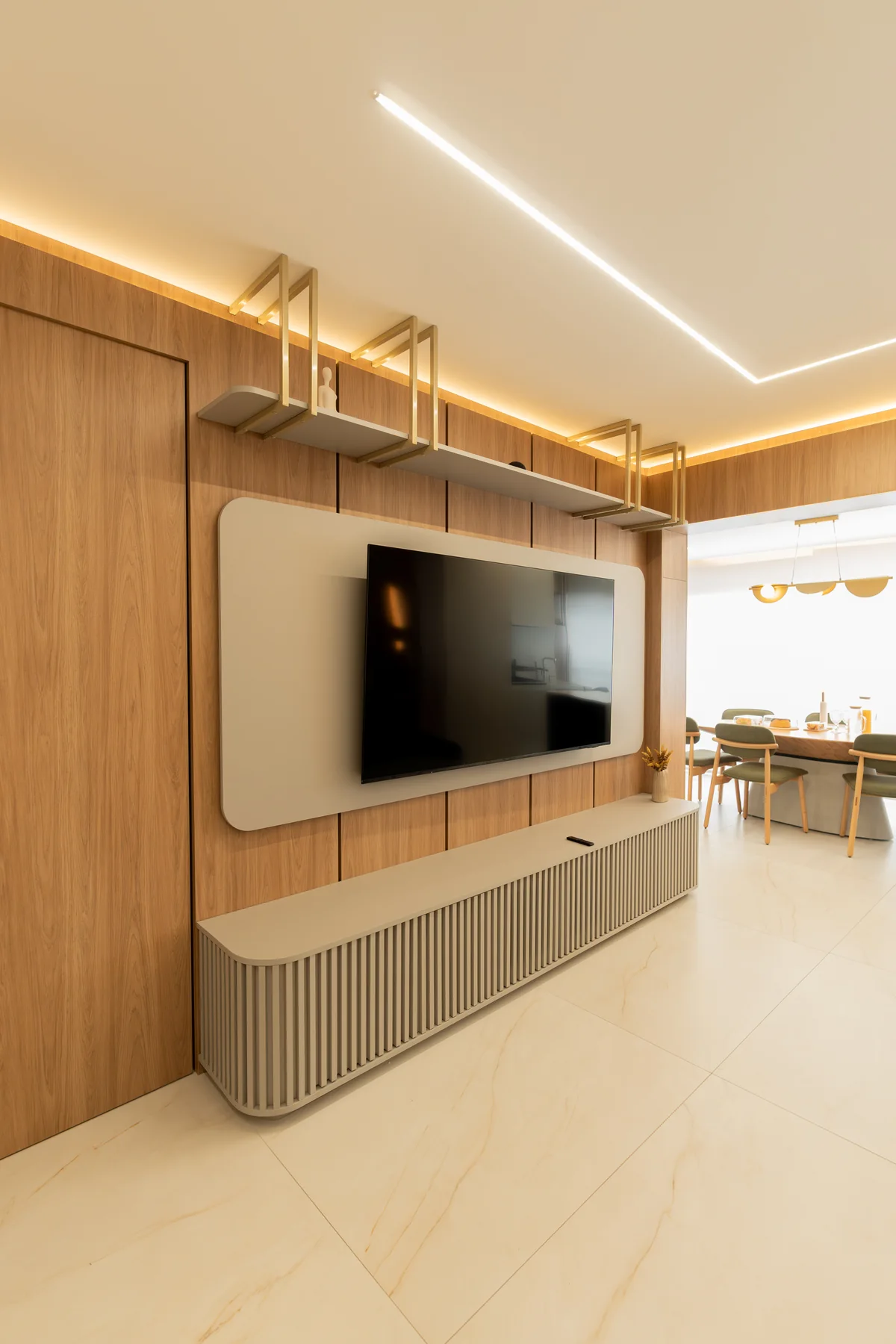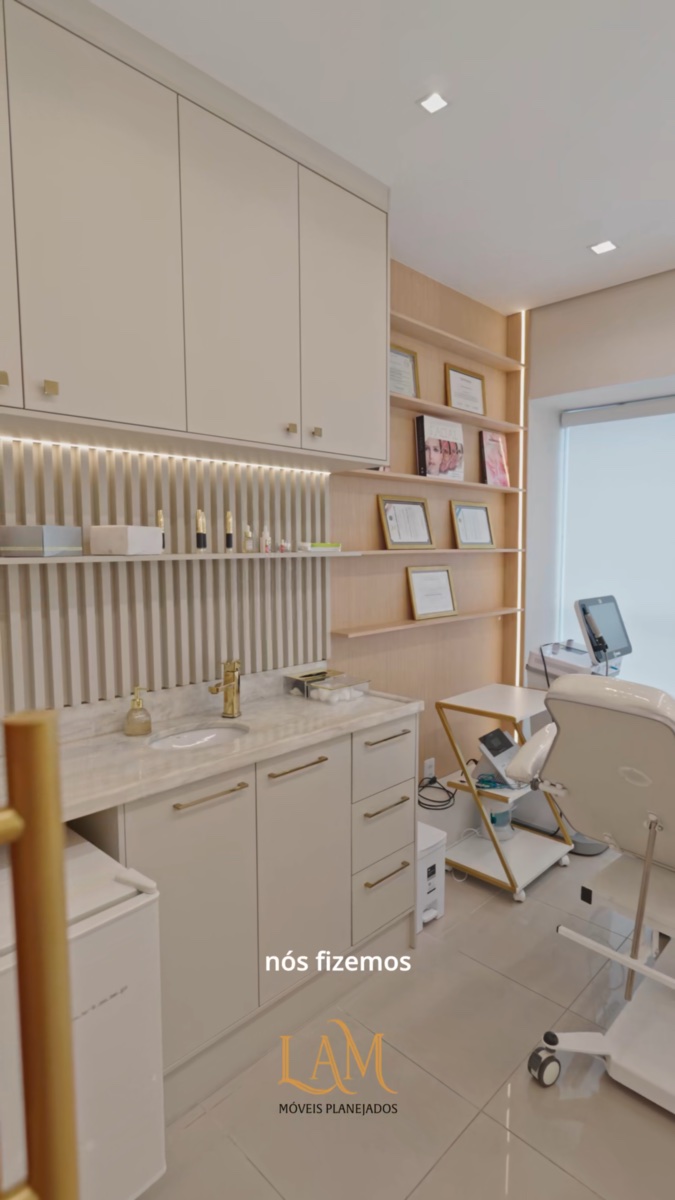
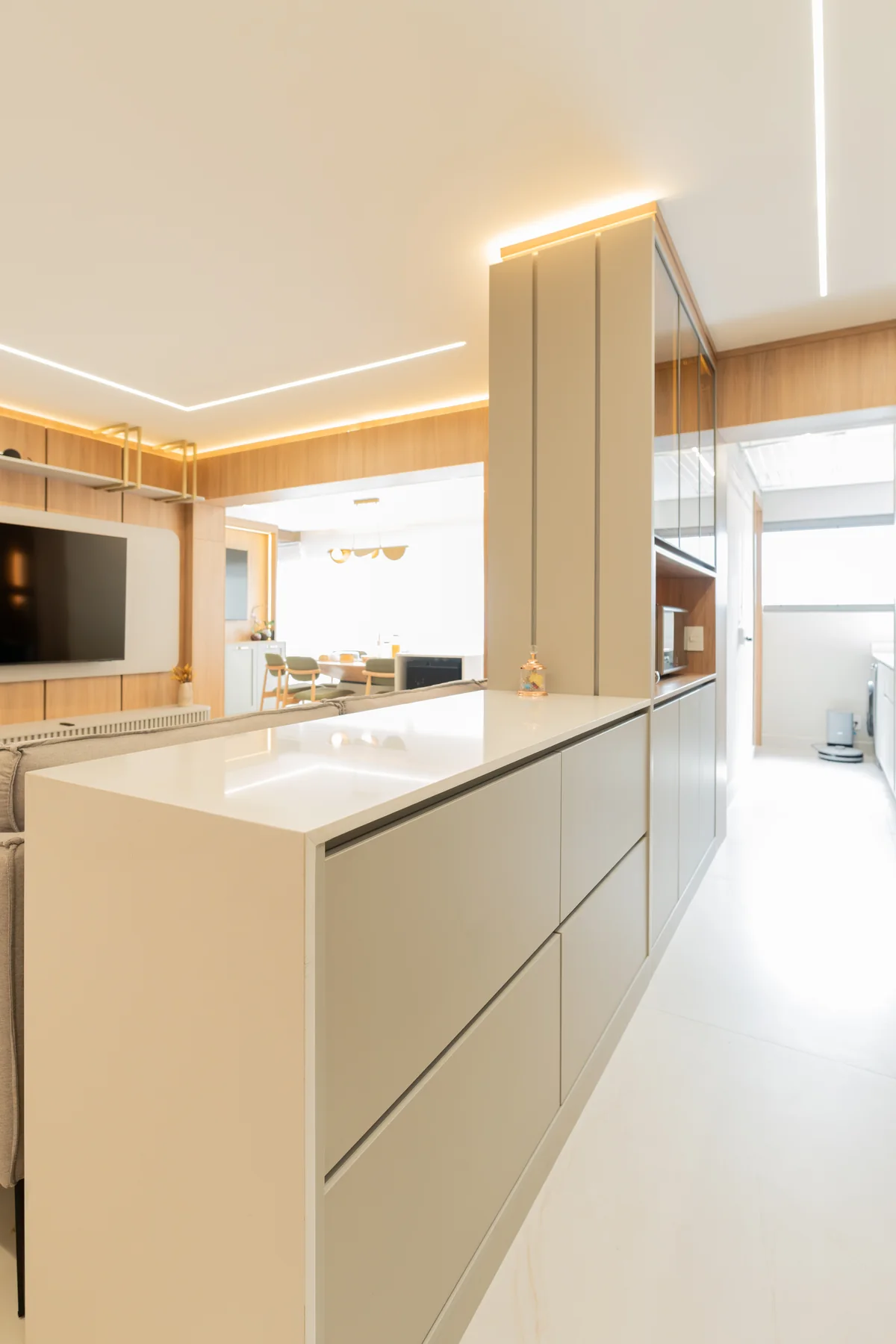
- Open with a view that establishes the room.
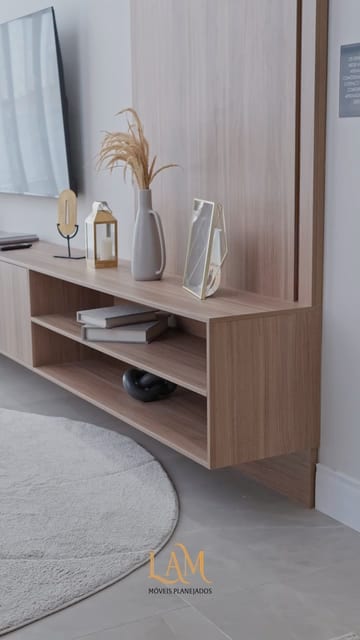
- Show the details that explain the craftsmanship.
- Sequence images as a short visit, not an unedited folder.
Start with the whole space
A hero image should answer basic questions without a caption: what kind of room is this, how does it feel and how do its elements fit together? A close-up of a hinge may be beautiful, but it is more meaningful once the viewer understands the kitchen it belongs to.
Plan an establishing frame, a few mid-distance views and then the closer details. This gives someone a sense of scale and circulation without making them reconstruct the floor plan from fragments.
Let materials look like themselves
Timber, stone, metal and upholstery respond differently to light. Dramatic lighting can create atmosphere, but colour and texture still need to feel credible to a buyer assessing a high-value project.
Before the shoot, check mixed colour temperatures, reflective surfaces and fittings. Then reserve time for junctions, finishes, working mechanisms and storage solutions that a wide view cannot explain.
- Wide frame: room and circulation.
- Medium frame: zones, cabinetry and use.
- Detail frame: joinery, finishes and mechanisms.
Shoot for the places images will live
A project may need a landscape website banner, portrait social assets, a sales presentation and campaign variations. If those uses are known in advance, composition can leave enough space for different crops and text overlays.
A useful brief names the project, its differentiators and the channels that will use the images. That is more actionable than simply asking for “some photos of the room”.
Edit a story, not a volume target
Ten nearly identical angles add little. A smaller selection that moves from the whole room to a practical solution and finally the finish gives the viewer more reasons to trust the work.
Khaph’s Valcenter portfolio shows this rhythm across real rooms and details. The case is from Brazil; the presentation principle applies just as well to a bespoke kitchen brand planning a UK portfolio.
When project photography appears in the design press
Brazilian projects photographed by Khaph show how images can travel beyond a portfolio. Clube Casa Design published the Apê BR apartment in São Paulo and credited Khaph Publicidade for the photography. CASA featured a 105 m² apartment designed by architect Larissa Albuquerque, again crediting Khaph’s images. The CASA story was also republished by iG.
On the international platform Archello, a 90 m² apartment by Larissa Albuquerque carries the photo credit “Khaph publicidade”. The iG version is a republication of the CASA feature, not a separate commission. Across these publications, a coherent set of views helps readers understand the space and the design decisions. The same principle matters for a London project: photograph both context and craft, and agree on accurate credits before publication.
Sources and further reading
Make the next finished space work harder for your brand.
Explore founder-led visual production for bespoke interior brands and discuss selected London shoots.
Discuss a production